Indonesian TTRPG Blogwagon: An Indonesian Magic System
This post is an entry for the Indonesian TTRPG Blogwagon
Magic in Indonesian folklore and mythology doesn't work the way it is in Dungeons & Dragons (D&D).
In D&D, your character can cast spells because your character is:
- a wizard/magic user who memorize magic from spellbooks and tapping into arcane powers to cast it.
- a sorcerer with innate magical powers passed down through your bloodline.
- a cleric/priest who is empowered with divine magic by your deity.
- a paladin who has taken an oath which represents some deity or ideology, giving them magical powers.
- a warlock who has made a pact with an entity and granted a set of magical powers.
In this case, magic works in a mechanical way, almost like technology which needs "fuel". In order to operate magic in D&D and fantasy fiction, one needs fuel like spell slots, mana, or whatever energy it is. In other ways, magic feels like superpowers.
Indonesian magic doesn't work that way. There's no single, unifying framework of magic. Indonesia is the largest archipelago by area, with over 1340 ethnic groups, with varying cultural practice, traditions, myths, and languages.
But there is a recurring ideas that connect the magical and supernatural traditions of Indonesia. Relationships between humans and spirits, ritual and offerings, sacred places and objects, invocations, taboos, inherited knowledge, spiritual intermediaries, and the idea that supernatural forces can be approached, persuaded, appeased, or bargained with.
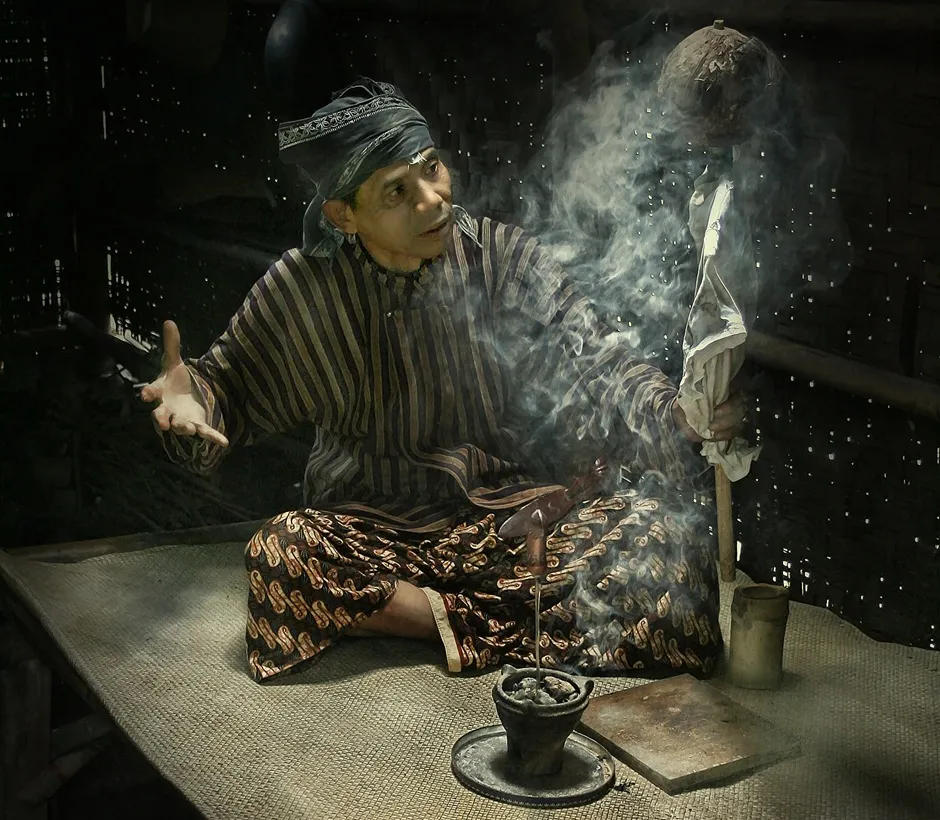 Stock photo of a Dukun (Shaman) by anggalanell
Say you need the rice fields in your village to be showered by rain. You don't just use energy flowing from the arcane or whatever to conjure rain clouds. That is such a convenient thing to do. That is how a lot of medieval fantasy fiction and D&D work.
How about in Indonesian magical practices? Well, one must do several steps to call upon the rain, involving ritual, offerings, and negotiating with a spirit. The ritual takes time and may need to be done in a specific location. The offerings need to be gathered. And a spirit must be appeased or convinced to control the rain for you.
To me, the emphasis on doing all of these things make it an interesting way to do magic in an Indonesian/Southeast Asian TTRPG setting (in my case, Oddipelago, my Anti-colonial TTRPG. It feels diegetic by design, which is perfect for OSR and system agnostic. For this magical system to work, there needs to be a clear procedure or structure for each spell.
What Other People Have Done With Folk Magic System
The closest thing that I can find to what I have in mind is Luke Gearing's magic system for Wolves Upon the Coast. In Wolves Upon the Coast, spells have different requirements, with no slots or energy or mana points to spend. Instead, each spell has a specific ritual that needs to be done in order to cast it.
So I thought I could use what Luke Gearing did, but by adding more emphasis on the ritual procedure and the negotiaton part. But the problem I encountered was the spell description becomes long.
After talking with Harbowoputra and Zedeck Siew, my go-to duo on Maritime Southeast Asia x TTRPG, they recommended to have spells as boons or rewards for appeasing a deity/spirit.
Zedeck gave a reference to one of his blogposts on Lady Hind Eye, a deity/spirit whose description includes Offering and Blessing. The blessing basically works like a spell, casted by Lady Hind Eye. But in order to cast it, the PC needs to grant her an offering.
Another reference that Zedeck gave is what he calls Pact, Price, and Procedure. A pact is how the PC negotiates with a deity/spirit. A price is something that the PC needs to pay to the deity/spirit. And procedure is how the PC cast the spell.
To be honest, what Zedeck has made are damn good. Especially the Pact, Price, Procedure one. So simple and so clear. And honestly, it makes me think whether I should continue down this path to create my own Indonesian magic system LOL
Now I am torn between making a magic system where the spells have their own entries or have it connected to a deity/spirit's description (or even their statblock). Perhaps I will talk about deity/spirit in another blogpost.
For now, I will make the spell entry using Pawang Hujan (Rain Caller) as an example.
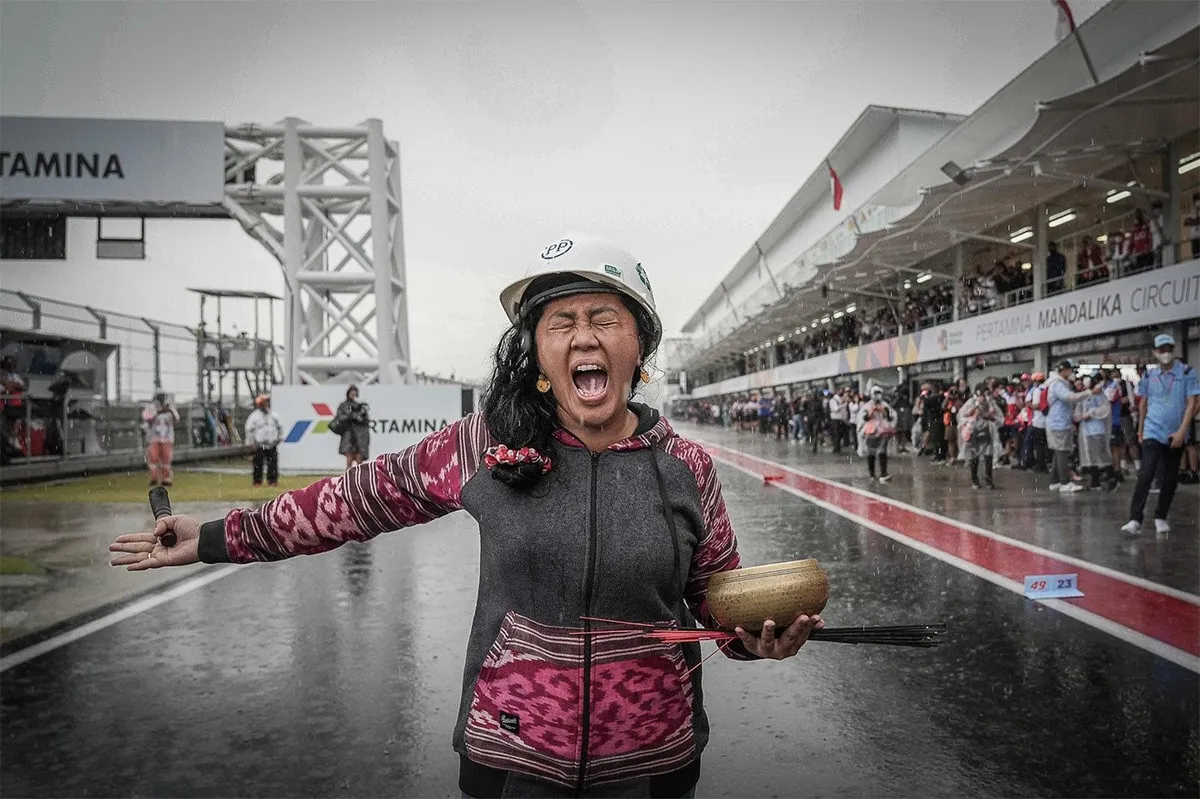 A photo of Raden Roro Istiati Wulandari, a Pawang Hujan at MotoGP Mandalika 2022
Context for Pawang Hujan
Pawang Hujan is someone who is able to call upon the rain to a location or divert it. Usually they do this because an area hasn't been raining for a while or there's an event that cannot be disturbed by rain.
It is said that in order to contact the spirit that can control the weather, Pawang Hujan must do a ritual which includes meditating and praying, while also fasting and only consuming rice and water. Others would grant gifts to the spirit, appeasing them with alcohol, rice, chili, shallot, and nails.
The most popular account of a Pawang Hujan was back in 2022, when Raden Roro Istiati Wulandari diverted the rain during MotoGP Mandalika 2022.
CONTROL RAIN
Source: A spirit residing in or around a body of water
Ritual: Meditate for a whole day while reciting the spirit's name. Only consume rice and water.
Offering: Initial (rice and alcholol, served beneath a black umbrella). Additional (chili peppers, shallots, nails, and alcohol, served beneath a black umbrella, or whatever specific gift the spirit desires).
Result: Bring, withhold, or divert rain over a field for an hour. Additional offerings increase the intensity, duration, and area, producing heavier rain, stronger winds, and eventually lightning.
My Indonesian Magic System
Magic is a bargain with spirits, deities, ancestors, and other supernatural beings who possess powers that mortals may call upon through ritual and offering.
Every magical practice is described using four parts: Source, Ritual, Offering, and Result.
Source: The Source is the spirit, deity, ancestor, or other supernatural entity providing the magic. The Source determines the nature and limits of the power.
Ritual: The Ritual describes the procedure to call upon the Source. This may involve fasting, meditation, prayer, mantras, particular places, objects, or other acts of ritual significance.
Offering: The Offering is what is given to the Source in exchange for its aid. An offering may be food, drink, valuables, sacrifices, promises, or anything else the spirit desires.
Offerings are not fixed magical components. A greater request may require a greater offering. The appropriate offering may also change depending on the Source. Learn what a spirit wants, and use that knowledge to bargain with it.
Result: The Result describes what the Source will do when it accepts the offering. The scale of the Result may depend upon the offering made. Greater offerings can produce effects that are more powerful, last longer, or affect a larger area.
The Result is not always guaranteed. A spirit may demand more, refuse the request, or fulfill it according to its own nature.
Final Thoughts
I want to thank Zedeck Siew and Harbowoputra for their insights.
I am still unsure whether I will keep that structure for a spell. I feel that it's too detailed and too much work for the players. But at the very least, it simulates how a magical system should be based on Indonesian folklore, mythology, and occult practices. Let me know what you think!